> For the complete documentation index, see [llms.txt](https://docs.coreframework.com/llms.txt). Markdown versions of documentation pages are available by appending `.md` to page URLs; this page is available as [Markdown](https://docs.coreframework.com/official-ui-kits/oxyninja-icons.md).
# OxyNinja Icons
Due to popular demand, we have decided to offer the classic icons which were shipped with both the original Core and WooCore kits (originally available through OxyNinja) to our documentation.
## SVG Set
{% hint style="info" %}
Please note, since these icons were originally available for OxyNinja, the icons here as a library can be imported to Oxygen Builder. We have included the separate SVGs below.
{% endhint %}
### Core Icons (SVG Set)
{% file src="/files/YcF5zlgifn6op2mrGkI5" %}
### WooCore Icons (SVG Set)
{% file src="/files/RqOdpmSYBSaxnh2qWDQB" %}
### Importing SVG Set to Oxygen
1. Unzip the files on your machine.
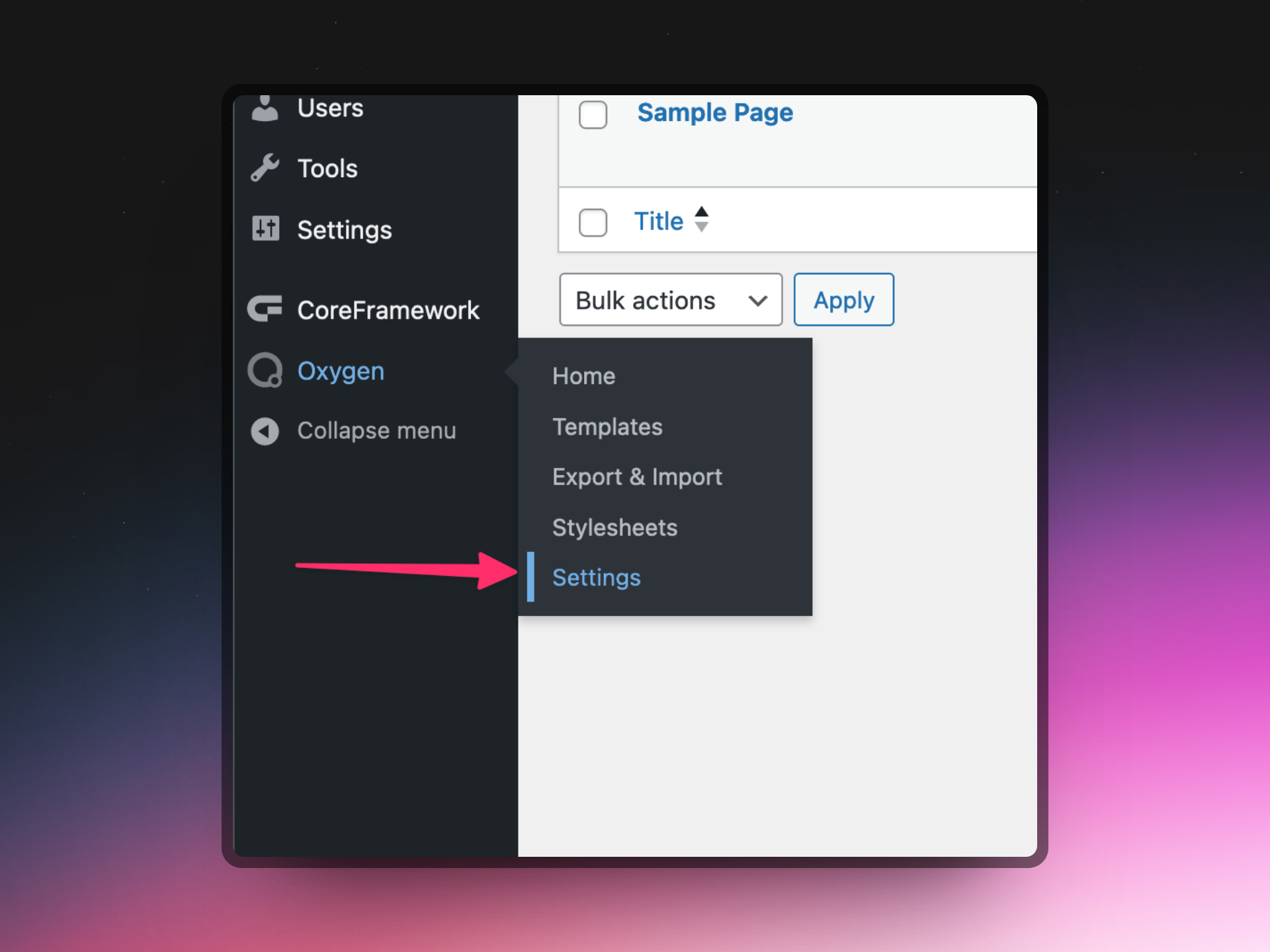
2. In WordPress, navigate to **Oxygen > Settings**
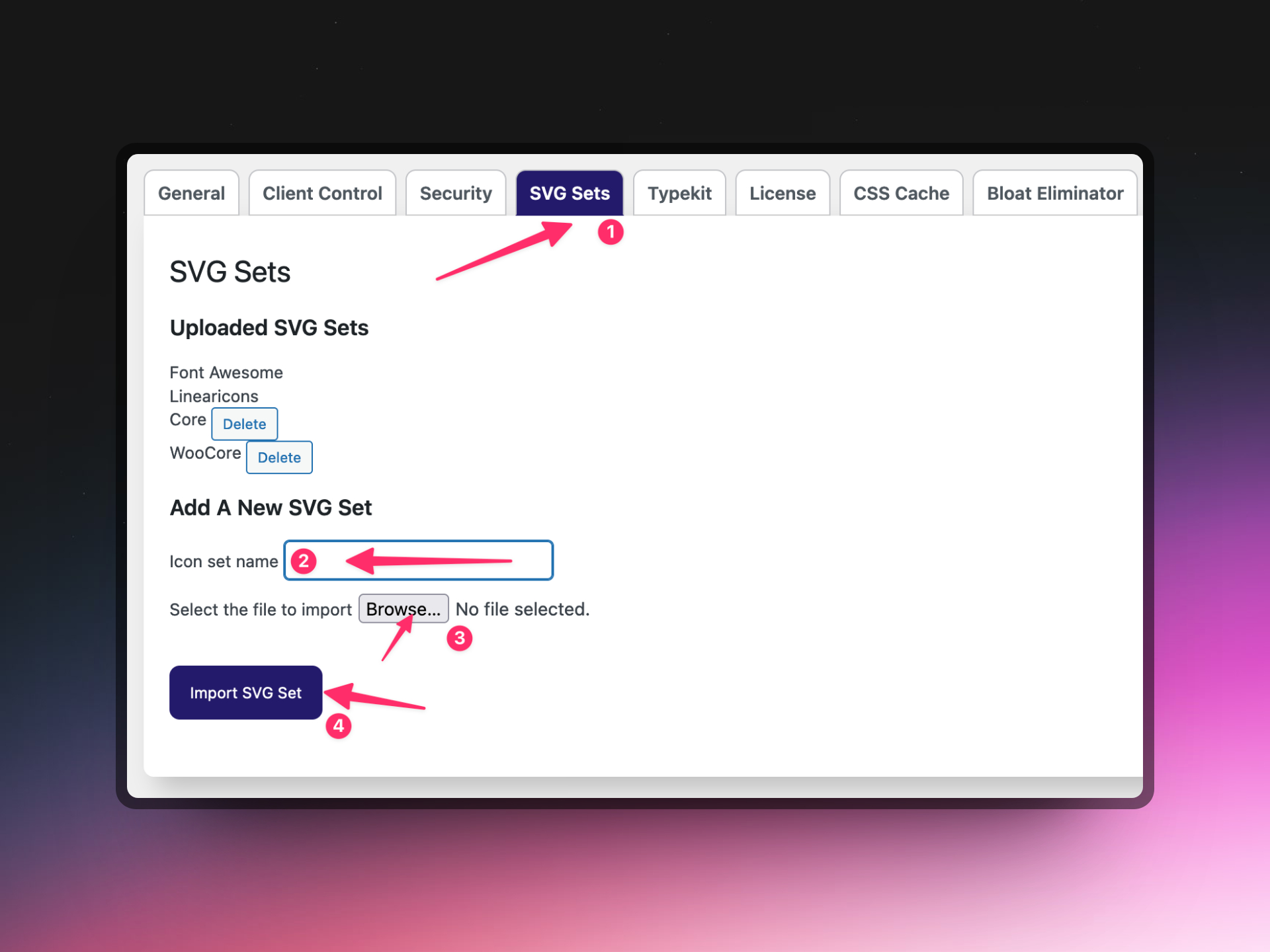
3. Next, navigate to the SVG Sets tab, enter an appropriate name for your SVG set (Core or WooCore), click browse to find the respective symbol-defs.svg file, and click on Import SVG Set.
4. Now, when choosing an icon from the Oxygen Builder, you should see that the SVG libraries are now available.
## SVG (Individual Files)
We are also providing the SVGs as individual files, enabling Bricks users to utilize the icons efficiently. This approach conserves resources, as you can include these files directly as code blocks. Simply copy the markup from each SVG file in the .zip archive and insert them as code blocks in Bricks or Oxygen.
### Core Icons (Individual)
{% file src="/files/37MIYgZMq6xpnbsraeOK" %}
### WooCore Icons (Individual)
{% file src="/files/EirgPlVzjHMBN8mtGhYa" %}